
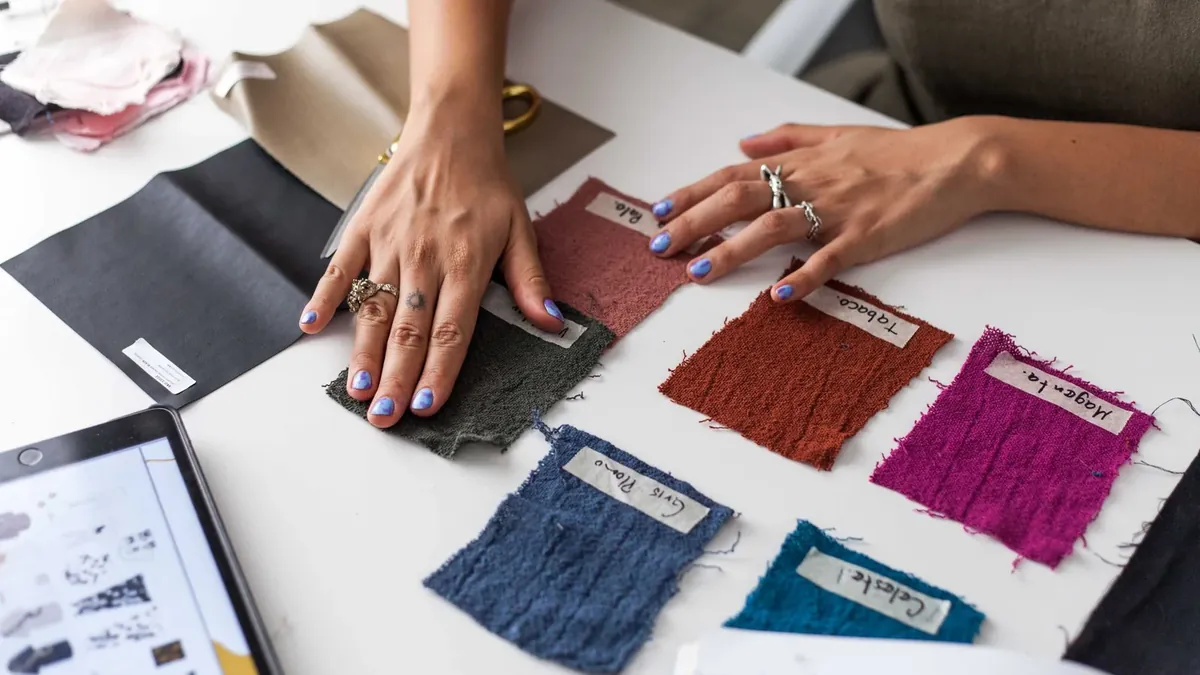
Define what how to source fabric tips for finding quality material means for the product
Material names are useful starting points, but how to source fabric tips for finding quality textile cannot be selected from a name alone. Clarify the garment, season, customer, price level, care method, required performance, and visual direction. A common fiber can behave very differently when yarn, structure, weight, finishing, and dyeing change. Treat this part of how to source fabric tips for finding quality material as a decision gate: unresolved details should remain visible instead of being converted into silent assumptions.
Translate the design brief into measurable textile specifications. For a custom apparel project, those specifications may involve points of measure, ease, grading, tolerances, movement, and approved sample dimensions. Maintain mandatory performance separate from preferences such as softness or surface character, because each choice can affect availability, cost, consistency, and processing. For how to source fabric tips for finding quality material, the practical output is a traceable instruction that a sample maker, production team, and inspector can interpret the same way.
Compare silhouettes and product roles
Map each proposed style to a job in the assortment: entry style, hero piece, layering option, performance item, seasonal update, or replenishment basic. This prevents a collection from carrying several custom apparel options that look different in sketches but compete for the same customer need. A how to source fabric tips for finding quality material project becomes easier to compare when this information is requested in the same format from every potential partner.
Review front, back, side, and movement views. Record the proportions that make each option distinct, including points of measure, ease, grading, tolerances, movement, and approved sample dimensions. Reference images can communicate direction, but measurements and construction notes are required to create an original program rather than an imitation. When planning how to source fabric tips for finding quality material, keep the rationale beside the decision so later substitutions or revisions can be evaluated consistently.
Match how to source fabric tips for finding quality material to construction and decoration
The fabric direction must tolerate the planned sewing and decoration route. Consider needle cutting, seam puckering, feed behavior, edge curl, fraying, bulk, heat sensitivity, ink or adhesive compatibility, and how embroidery weight affects drape. Set up trial seams and decoration strike-offs in advance of committing to bulk fabric direction. In a how to source fabric tips for finding quality material review, connect this point to the customer use case and to the exact sample or document that will prove it.
For custom apparel production, construction control includes pattern accuracy, seam choice, reinforcement, closure installation, decoration placement, and finishing. A beautiful fabric can still be the wrong choice if it cannot hold the silhouette, survive finishing, accept the artwork, or meet the intended care instructions consistently. For how to source fabric tips for finding quality material, this is also a useful place to note the acceptance method, responsible person, and evidence needed to close the issue.
Plan launch evidence and measurement
Marketing for how to source fabric tips for finding quality fabric should show the product truthfully: fit, fabric, construction, use, care, and the customer problem it solves. Create product pages, photography, size guidance, delivery information, and support answers prior to increasing traffic. Claims about performance, origin, sustainability, or compliance need appropriate evidence. In a how to source fabric tips for finding quality material review, connect this point to the customer use case and to the exact sample or document that will prove it.
Choose a small set of measures connected to decisions, such as qualified email sign-ups, sample feedback, conversion rate, return reasons, sell-through by size, contribution margin, and reorder demand. Vanity reach is less useful than learning why customers buy, hesitate, return, or recommend. For how to source fabric tips for finding quality material, this is also a useful place to note the acceptance method, responsible person, and evidence needed to close the issue.
Sample and test the selected direction
Work with the sample to assess silhouette, movement, comfort, balance, construction, decoration, and care. Product-relevant checks can include dimensional stability, colorfastness, seam strength, pilling, appearance, and decoration durability. Requirements vary by selling market and intended use, so confirm any regulated or performance claim with qualified guidance and suitable evidence. In the context of how to source fabric tips for finding quality material, the evidence belongs in the same working pack as the measurements, swatches, artwork, and comments.
Write comments against the specification and keep approved measurements, swatches, trims, artwork, and photos together. A final sample should represent the bulk standard closely enough that production teams and inspectors can make consistent decisions. Treat this part of how to source fabric tips for finding quality material as a decision gate: unresolved details should remain visible instead of being converted into silent assumptions.
Connect decisions to cost and timing
Every added color, custom trim, sample round, test, print setup, pattern, and packing variation can affect minimums, price, and schedule. Set side by side options while development is still flexible. Cost reduction should remove low-value complexity without weakening the garment's fit, durability, or identity. When planning how to source fabric tips for finding quality material, keep the rationale beside the decision so later substitutions or revisions can be evaluated consistently.
Create a timeline from dependencies rather than a single promised date. Material approval, sample review, revisions, bulk booking, inspection, and transit each need an owner and realistic response time. Add contingency around novel processes and fixed launch commitments. A how to source fabric tips for finding quality material project becomes easier to compare when this information is requested in the same format from every potential partner.
Build a focused range and production brief
Start with the few custom apparel styles that make the clearest commercial argument. Limit overlapping colorways, share materials where sensible, and estimate demand by size. Complexity has to be added after fit, quality, cost, and customer response are understood. For how to source fabric tips for finding quality material, this is also a useful place to note the acceptance method, responsible person, and evidence needed to close the issue.
A practical KNAPMOD enquiry includes selected style, original references, quantity, size range, fabric direction, measurements, decoration, labels, packaging, destination, and timeline. Clearly mark what is approved and where recommendations are still needed. On how to source fabric tips for finding quality material, link the decision to its effect on fit, appearance, durability, cost, or schedule instead of treating it as an isolated preference.
Continue reading
Viscose Fabric Guide for Quality Clothing Buyers
Understand the material behind custom apparel through structure, weight, stretch, performance, testing, product use, and clear fabric specifications.
Read articleTypes of Shorts with Style, Images and Fabric Details
Understand the material behind custom apparel through structure, weight, stretch, performance, testing, product use, and clear fabric specifications.
Read articleAll You Need to Know About Casual Jersey Fabric
Understand the material behind custom apparel through structure, weight, stretch, performance, testing, product use, and clear fabric specifications.
Read articleRelated products
Activewear & Sportswear
Plan performance garments around movement, fabric recovery, comfort, decoration compatibility, and the demands of the activity.
Explore productCaps, Hats & Accessories
Extend a collection with caps, hats, beanies, bags, socks, aprons, and other sewn goods developed around their own construction and branding needs.
Explore productHoodies & Sweatshirts
Develop pullover hoodies, zip-ups, crewnecks, and coordinated sweats with the fabric weight, fit, trims, and decoration your collection requires.
Explore productReady to discuss production?
Share your product idea, quantities, references, target fabric, and timeline. KNAPMOD can review the details and help you map the next production step.
Send your enquiry