Screen printing and embroidery create different results
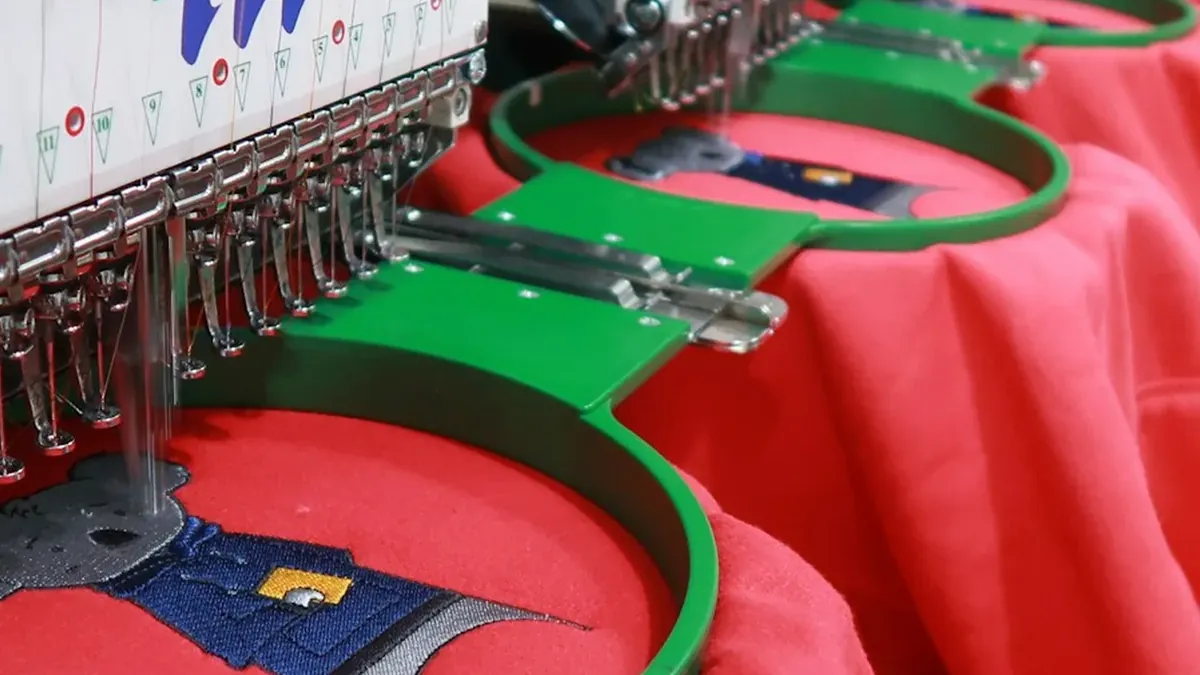
Screen printing pushes ink through a prepared screen and is often suited to flat artwork and repeat quantities. Embroidery builds artwork with thread and adds texture, structure, and weight. The better choice depends on fabric, artwork detail, number of colors, placement, garment construction, desired hand feel, care, and order shape. On screen printing vs embroidery, link the decision to its effect on fit, appearance, durability, cost, or schedule instead of treating it as an isolated preference.
Both methods need production evidence. Review an ink strike-off or embroidered sew-out on the intended textile, then confirm dimensions, colors, position, backing, density, curing or finishing, and wash performance. A digital mockup alone cannot show puckering, ink feel, stretch response, or thread coverage. Applied to screen printing vs embroidery, this checkpoint should answer one practical question about the custom apparel before more money or time is committed.
Specify weight, hand feel, stretch, and appearance
Weight has to be recorded with the correct unit and tolerance, but it is only one dimension of quality. Density, yarn size, brushing, compaction, coating, and finishing influence thickness and hand feel. Stretch has to be paired with recovery; a fabric that extends easily but stays bagged out may fail in use. For screen printing vs embroidery, this is also a useful place to note the acceptance method, responsible person, and evidence needed to close the issue.
Evaluate color in the intended light and check face-to-back appearance, luster, texture, transparency, and surface defects. If a design uses several panels or companion trims, establish shade and texture standards for the complete garment rather than approving each component in isolation. On screen printing vs embroidery, link the decision to its effect on fit, appearance, durability, cost, or schedule instead of treating it as an isolated preference.
Match screen printing vs embroidery to construction and decoration
The textile must tolerate the planned sewing and decoration route. Consider needle cutting, seam puckering, feed behavior, edge curl, fraying, bulk, heat sensitivity, ink or adhesive compatibility, and how embroidery weight affects drape. Create trial seams and decoration strike-offs ahead of committing to bulk textile. Treat this part of screen printing vs embroidery as a decision gate: unresolved details should remain visible instead of being converted into silent assumptions.
For custom apparel production, construction control includes pattern accuracy, seam choice, reinforcement, closure installation, decoration placement, and finishing. A beautiful fabric can still be the wrong choice if it cannot hold the silhouette, survive finishing, accept the artwork, or meet the intended care instructions consistently. For screen printing vs embroidery, this is also a useful place to note the acceptance method, responsible person, and evidence needed to close the issue.
Measure quality with relevant evidence
Quality checks may include dimensional stability, colorfastness, seam strength, pilling, appearance, and decoration durability. Select methods and acceptance criteria for the actual market, use, fabric, color, and care route. A generic inspection checklist is helpful for workmanship but does not replace style-specific testing or legal review. In the context of screen printing vs embroidery, the evidence belongs in the same working pack as the measurements, swatches, artwork, and comments.
Hold test reports, measurement results, approved swatches, artwork, sample photos, and corrective actions tied to the same style and version. When something fails, document the cause, proposed change, retest, and approval rather than accepting an undocumented verbal adjustment. Applied to screen printing vs embroidery, this checkpoint should answer one practical question about the custom apparel before more money or time is committed.
Check whether the supplier matches the product
Require clarity on the factory to explain recent experience with custom apparel programs comparable in material, construction, and volume. Relevant capability includes control of pattern accuracy, seam choice, reinforcement, closure installation, decoration placement, and finishing. Request anonymized production examples or process evidence where confidentiality allows, and ask which operations are completed directly versus coordinated through approved partners. Within a screen printing vs embroidery brief, mark whether this point is fixed, proposed by the factory, or still waiting for buyer approval.
A capable answer should identify risks as well as possibilities. Listen for questions about intended use, tolerance, artwork, care, and testing. Generic assurances such as 'premium quality' are not enough; the supplier needs to be able to translate the brief into measurable checkpoints and explain what must be resolved in advance of sampling. On screen printing vs embroidery, link the decision to its effect on fit, appearance, durability, cost, or schedule instead of treating it as an isolated preference.
Choose sourcing and production terms deliberately
Set side by side potential partners on garment fit, response quality, fabric direction access, sampling discipline, quality systems, minimum conditions, price scope, schedule, payment terms, communication, and evidence. Establish which operations are direct and which use approved partners. The brief should not treat a low MOQ or fast promise as a complete supplier assessment. In a screen printing vs embroidery review, connect this point to the customer use case and to the exact sample or document that will prove it.
Establish for a stage-based quotation and schedule. Establish what happens when fabric minimums exceed the garment order, how substitutions are approved, who owns patterns and artwork, how defects are handled, and what documents accompany shipment. Clear terms protect both buyer and production partner. A screen printing vs embroidery project becomes easier to compare when this information is requested in the same format from every potential partner.
Compare MOQ, price, timing, and terms on one scope
MOQ is not a single measure of accessibility. Confirm whether the minimum applies per style, color, fabric, print, trim, or total order, and ask what changes when several sizes share one color. Set side by side development fees, sample charges, material minimums, packaging, testing, freight, duties, and payment terms separately from the unit price. In a screen printing vs embroidery review, connect this point to the customer use case and to the exact sample or document that will prove it.
Request a stage-based schedule covering specification review, material approval, sampling, revisions, bulk approval, production, inspection, packing, and transit. Treat unusually fast promises as questions to investigate. A decision-ready schedule states its assumptions and identifies decisions that could move the date. A screen printing vs embroidery project becomes easier to compare when this information is requested in the same format from every potential partner.
Continue reading
Clothing Embellishments: Print, Embroidery, Labels and Finishes
Learn how this apparel process works, with practical controls for specifications, approvals, quality, cost, documentation, and production handoff.
Read articleScreen Printing for Custom Clothing
Plan custom apparel production with practical guidance on fabric, fit, construction, sampling, customization, quality checks, and a complete quote brief.
Read articleTypes of Garment Samples in Apparel Production
Learn how this apparel process works, with practical controls for specifications, approvals, quality, cost, documentation, and production handoff.
Read articleRelated products
Activewear & Sportswear
Plan performance garments around movement, fabric recovery, comfort, decoration compatibility, and the demands of the activity.
Explore productCaps, Hats & Accessories
Extend a collection with caps, hats, beanies, bags, socks, aprons, and other sewn goods developed around their own construction and branding needs.
Explore productHoodies & Sweatshirts
Develop pullover hoodies, zip-ups, crewnecks, and coordinated sweats with the fabric weight, fit, trims, and decoration your collection requires.
Explore productReady to discuss production?
Share your product idea, quantities, references, target fabric, and timeline. KNAPMOD can review the details and help you map the next production step.
Send your enquiry