
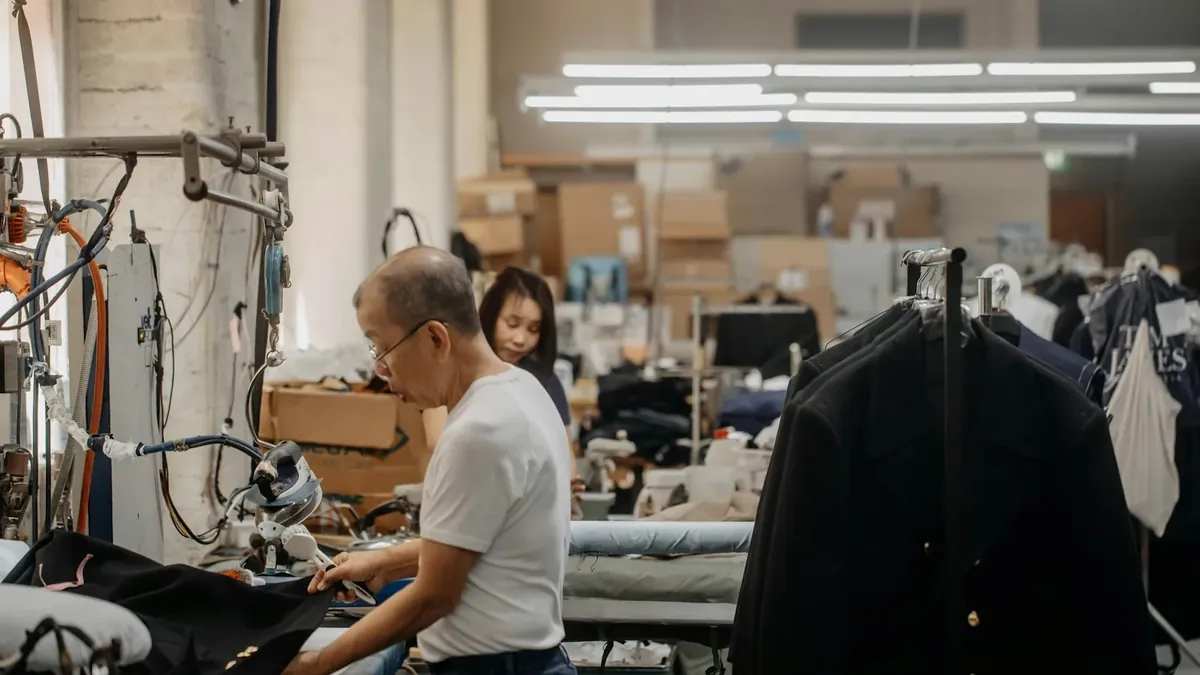
Define the leather jacket program before searching
Shortlisting for how to evaluate leather jacket manufacturers works best when the product brief comes before the vendor list. Log the intended leather jacket use, price position, materials, construction, branding, order shape, and destination. The result turns broad marketing claims into questions that can be compared on one basis. For how to evaluate leather jacket manufacturers, this is also a useful place to note the acceptance method, responsible person, and evidence needed to close the issue.
Write down shoulder mobility, sleeve pitch, chest ease, armhole comfort, closure allowance, and layering room. Add colorways, quantities by size, packaging, labels, destination, and the decisions that remain open. For program capability, evidence, and production control, separate facts that need documents from preferences that can be judged in a sample. The process prevents an attractive website or low headline price from replacing proper due diligence. Treat this part of how to evaluate leather jacket manufacturers as a decision gate: unresolved details should remain visible instead of being converted into silent assumptions.
Write a production-ready material specification
The completed specification has to make well-defined production partner or mill reference, fiber content, construction, weight and tolerance, usable width, color standard, finish, stretch and recovery where relevant, care method, test specifications, defect limits, and substitute approval. Attach a sealed swatch when physical review is significant. For how to evaluate leather jacket manufacturers, this is also a useful place to note the acceptance method, responsible person, and evidence needed to close the issue.
Send KNAPMOD the garment reference, intended use, quantities, colorways, target feel, performance needs, destination, and any approved fabric. The process gives the sourcing discussion a practical starting point while leaving room to compare alternatives against the same criteria. For how to evaluate leather jacket manufacturers, the practical output is a traceable instruction that a sample maker, production team, and inspector can interpret the same way.
Engineer fit and construction together
The pattern must account for both the body and the textile. Examine shoulder mobility, sleeve pitch, chest ease, armhole comfort, closure allowance, and layering room. Then define seam type, stitch class, reinforcement, edge finish, closure, pocket construction, and tolerances. Details that appear small on a sketch can control comfort, durability, and sewing time. For how to evaluate leather jacket manufacturers, tie this decision to one named owner and an approval date so it cannot drift between sampling and bulk work.
For this style family, pay particular attention to hide placement, panel matching, stitch-hole control, reinforced stress points, clean edges, and lining suspension. Sample the highest-risk size or feature early. If the range includes substantially different silhouettes, do not assume one base pattern can be altered safely without a new fit review. For how to evaluate leather jacket manufacturers, the practical output is a traceable instruction that a sample maker, production team, and inspector can interpret the same way.
Match how to evaluate leather jacket manufacturers to construction and decoration
The material must tolerate the planned sewing and decoration route. Consider needle cutting, seam puckering, feed behavior, edge curl, fraying, bulk, heat sensitivity, ink or adhesive compatibility, and how embroidery weight affects drape. Prepare trial seams and decoration strike-offs ahead of committing to bulk material. When planning how to evaluate leather jacket manufacturers, keep the rationale beside the decision so later substitutions or revisions can be evaluated consistently.
For leather jacket production, construction control includes hide placement, panel matching, stitch-hole control, reinforced stress points, clean edges, and lining suspension. A beautiful fabric can still be the wrong choice if it cannot hold the silhouette, survive finishing, accept the artwork, or meet the intended care instructions consistently. In the context of how to evaluate leather jacket manufacturers, the evidence belongs in the same working pack as the measurements, swatches, artwork, and comments.
Plan decoration and brand finishing
Choose print, embroidery, appliqué, patches, washes, trims, and labels after considering fabric behavior and seam placement. Artwork scale needs to be checked on the intended size range, not only on a digital mockup. Heavy or stiff decoration can change drape and comfort. In a how to evaluate leather jacket manufacturers review, connect this point to the customer use case and to the exact sample or document that will prove it.
Coordinate woven labels, printed labels, care information, hang tags, and packaging with the item hierarchy. Brand finishing should identify the collection without obscuring function. Capture artwork versions, colors, placement measurements, backing, and acceptable appearance in the approval pack. In the context of how to evaluate leather jacket manufacturers, the evidence belongs in the same working pack as the measurements, swatches, artwork, and comments.
Choose sourcing and production terms deliberately
Compare potential partners on product fit, response quality, fabric direction access, sampling discipline, quality systems, minimum conditions, price scope, schedule, payment terms, communication, and evidence. Verify which operations are direct and which use approved partners. The brief should not treat a low MOQ or fast promise as a complete factory assessment. A how to evaluate leather jacket manufacturers project becomes easier to compare when this information is requested in the same format from every potential partner.
Ask for a stage-based quotation and schedule. Check what happens when material minimums exceed the garment order, how substitutions are approved, who owns patterns and artwork, how defects are handled, and what documents accompany shipment. Clear terms protect both buyer and production partner. Treat this part of how to evaluate leather jacket manufacturers as a decision gate: unresolved details should remain visible instead of being converted into silent assumptions.
Build a product-specific quality plan
A quality plan for leather jacket should document incoming materials, measurements, workmanship, function, decoration, labels, packing, and the agreed inspection stage. Product testing may include rub colorfastness, flexing, tear strength, hardware security, finish consistency, and dimensional behavior. The relevant methods and acceptance levels depend on style, market, intended use, and any claims made to customers. When planning how to evaluate leather jacket manufacturers, keep the rationale beside the decision so later substitutions or revisions can be evaluated consistently.
Request who checks work during production, how nonconforming pieces are handled, and which records are available. Approval samples, shade standards, measurement charts, artwork files, and packing instructions should have documented versions. Final inspection cannot correct a weak specification or uncontrolled material change made earlier. In a how to evaluate leather jacket manufacturers review, connect this point to the customer use case and to the exact sample or document that will prove it.
Continue reading
How to Evaluate Athletic Wear Manufacturers (USA, Pakistan, Global)
Evaluate activewear manufacturers using evidence on materials, construction, samples, quality control, quote scope, communication, and production fit.
Read articleHow to Evaluate Uniform Manufacturers
Evaluate uniform and workwear manufacturers using evidence on materials, construction, samples, quality control, quote scope, communication, and production.
Read articleHow to Evaluate Shirt Manufacturers (USA, Pakistan, Global)
Evaluate shirt and polo manufacturers using evidence on materials, construction, samples, quality control, quote scope, communication, and production fit.
Read articleRelated products
Leather Jackets
Plan leather outerwear around material character, panel construction, lining, hardware, fit, finishing, and the details that distinguish the style.
Explore productActivewear & Sportswear
Plan performance garments around movement, fabric recovery, comfort, decoration compatibility, and the demands of the activity.
Explore productCaps, Hats & Accessories
Extend a collection with caps, hats, beanies, bags, socks, aprons, and other sewn goods developed around their own construction and branding needs.
Explore productReady to discuss production?
Share your product idea, quantities, references, target fabric, and timeline. KNAPMOD can review the details and help you map the next production step.
Send your enquiry