
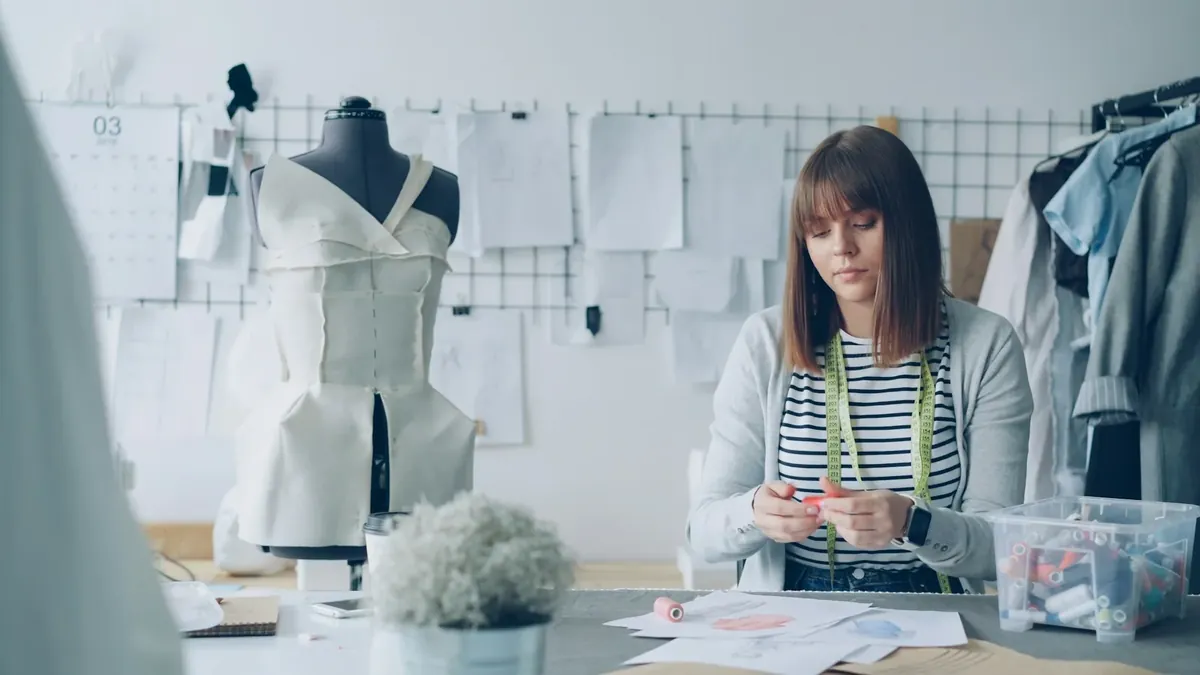
Start with a specific customer and problem
Starting a Clothing Brand Complete Business Guide begins with evidence about a customer, not a broad wish to sell clothing. Set who will buy, when the program is used, what current options get wrong, the expected price range, and why the proposed offer is meaningfully different. Interviews, store observation, search behavior, returns, and small tests are more useful than assumptions. Treat this part of starting a clothing brand complete business guide as a decision gate: unresolved details should remain visible instead of being converted into silent assumptions.
Turn the research into a one-sentence proposition and a narrow opening range. If the project includes custom apparel, decide which use case and customer matter first. A focused product promise makes design, sourcing, photography, pricing, and marketing decisions easier to judge. Treat this part of starting a clothing brand complete business guide as a decision gate: unresolved details should remain visible instead of being converted into silent assumptions.
Match starting a clothing brand complete business guide to construction and decoration
The material must tolerate the planned sewing and decoration route. Consider needle cutting, seam puckering, feed behavior, edge curl, fraying, bulk, heat sensitivity, ink or adhesive compatibility, and how embroidery weight affects drape. Create trial seams and decoration strike-offs in advance of committing to bulk material. For starting a clothing brand complete business guide, tie this decision to one named owner and an approval date so it cannot drift between sampling and bulk work.
For custom apparel production, construction control includes pattern accuracy, seam choice, reinforcement, closure installation, decoration placement, and finishing. A beautiful fabric can still be the wrong choice if it cannot hold the silhouette, survive finishing, accept the artwork, or meet the intended care instructions consistently. For starting a clothing brand complete business guide, tie this decision to one named owner and an approval date so it cannot drift between sampling and bulk work.
Measure quality with relevant evidence
Quality checks may include dimensional stability, colorfastness, seam strength, pilling, appearance, and decoration durability. Select methods and acceptance criteria for the actual market, use, fabric direction, color, and care route. A generic inspection checklist is helpful for workmanship but does not replace item-specific testing or legal review. For starting a clothing brand complete business guide, tie this decision to one named owner and an approval date so it cannot drift between sampling and bulk work.
Hold test reports, measurement results, approved swatches, artwork, sample photos, and corrective actions tied to the same style and version. When something fails, document the cause, proposed change, retest, and approval rather than accepting an undocumented verbal adjustment. When planning starting a clothing brand complete business guide, keep the rationale beside the decision so later substitutions or revisions can be evaluated consistently.
Plan sourcing risk and bulk consistency
Check stock status, production minimum, color minimum, lead time, repeat availability, lot size, and whether sampling material represents bulk. Request how shade bands, roll inspection, usable width, and defects are controlled. Prepare approval time into the schedule for lab dips, strike-offs, or replacement swatches. Within a starting a clothing brand complete business guide brief, mark whether this point is fixed, proposed by the factory, or still waiting for buyer approval.
When a custom fabric direction is necessary, define ownership of the specification and what happens to excess quantity. When stock is acceptable, reserve enough for approved quantities and testing. Neither route is automatically better; the right choice balances distinctiveness, cash exposure, replenishment, and consistency. Within a starting a clothing brand complete business guide brief, mark whether this point is fixed, proposed by the factory, or still waiting for buyer approval.
Build a product-specific quality plan
A quality plan for custom apparel works best when it includes incoming materials, measurements, workmanship, function, decoration, labels, packing, and the agreed inspection stage. Product testing may include dimensional stability, colorfastness, seam strength, pilling, appearance, and decoration durability. The relevant methods and acceptance levels depend on product, market, intended use, and any claims made to customers. In a starting a clothing brand complete business guide review, connect this point to the customer use case and to the exact sample or document that will prove it.
Require clarity on who checks work during production, how nonconforming pieces are handled, and which records are available. Approval samples, shade standards, measurement charts, artwork files, and packing instructions should have documented versions. Final inspection cannot correct a weak specification or uncontrolled fabric direction change made earlier. On starting a clothing brand complete business guide, link the decision to its effect on fit, appearance, durability, cost, or schedule instead of treating it as an isolated preference.
Score evidence and prepare the enquiry
Create a written scorecard for style fit, technical response, sample execution, document quality, communication, commercial clarity, and risk handling. Organize style capability, evidence, and production control evidence separate from sales language. References and certifications has to be checked with the issuer or owner where they are material to the buying decision. On starting a clothing brand complete business guide, link the decision to its effect on fit, appearance, durability, cost, or schedule instead of treating it as an isolated preference.
Before contacting KNAPMOD about a custom apparel project, prepare the style type, quantities, sizes, fabric direction, artwork, labels, packaging, destination, and desired timeline. The goal of the first exchange is to identify missing information and a realistic next step, not to force a final price from an incomplete brief. Applied to starting a clothing brand complete business guide, this checkpoint should answer one practical question about the custom apparel before more money or time is committed.
Prepare the handoff to KNAPMOD
Send the current garment brief, drawings or references, measurements, quantity, size range, fabric direction, decoration, labels, packaging, destination, and requested date. Include previous samples or test information when available and identify decisions that need manufacturing input. For starting a clothing brand complete business guide, the practical output is a traceable instruction that a sample maker, production team, and inspector can interpret the same way.
The first review should establish feasibility, missing information, likely approval stages, and the next useful deliverable. That creates a stronger basis for quotation and sampling than asking for a final price prior to the program is defined. In a starting a clothing brand complete business guide review, connect this point to the customer use case and to the exact sample or document that will prove it.
Continue reading
Starting a Loungewear Business Brand: Everything You Need to Know
Plan a stronger apparel offer with practical guidance on customer focus, product scope, development, costing, sampling, sourcing, and launch decisions.
Read articleStarting a Small Scale Apparel Brand a Step By Step Procedure
Plan a stronger apparel offer with practical guidance on customer focus, product scope, development, costing, sampling, sourcing, and launch decisions.
Read articleTypes of Hats to Consider Before Starting a Hat Brand
Plan a stronger apparel offer with practical guidance on customer focus, product scope, development, costing, sampling, sourcing, and launch decisions.
Read articleRelated products
Activewear & Sportswear
Plan performance garments around movement, fabric recovery, comfort, decoration compatibility, and the demands of the activity.
Explore productCaps, Hats & Accessories
Extend a collection with caps, hats, beanies, bags, socks, aprons, and other sewn goods developed around their own construction and branding needs.
Explore productHoodies & Sweatshirts
Develop pullover hoodies, zip-ups, crewnecks, and coordinated sweats with the fabric weight, fit, trims, and decoration your collection requires.
Explore productReady to discuss production?
Share your product idea, quantities, references, target fabric, and timeline. KNAPMOD can review the details and help you map the next production step.
Send your enquiry