
Specify the fold direction
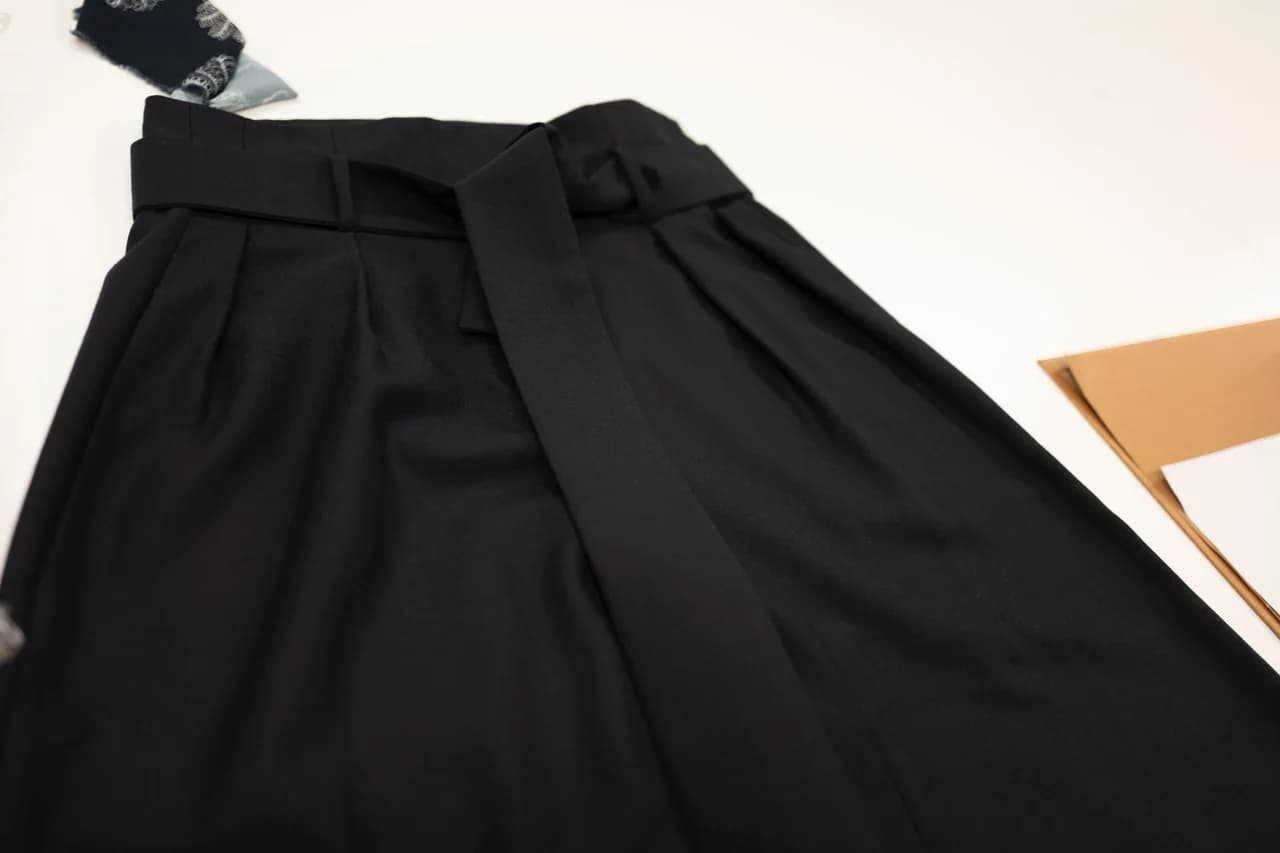
Show a front photograph with the waistband fastened. Mark the number of pleats, their direction and the point where each fold opens into the leg.
Explore the garments, materials, and development decisions behind your next range.
Starting a clothing brand?Build a practical route through sourcing, sampling, branding, and production.
Starting a clothing brand?Brief tailored pleated trousers for retail or uniform ranges. Define pleat direction, waistband height, seat ease and the break over the shoe.
Sampling and bulk production are separate stages. We confirm the quantity breakdown, material availability, start dates and approval requirements in your quotation. Shipping transit is additional to production time.
Show a front photograph with the waistband fastened. Mark the number of pleats, their direction and the point where each fold opens into the leg.
A pleat cut for the natural waist will open differently if the trouser sits low. Give the wearing position, seat ease and top-of-thigh measurement together.
Decide the hem width and trouser break with the footwear used for styling. A turn-up adds weight and can change the fall of a lightweight fabric.
Walk and sit in the sample with pockets empty. Check whether the pleats pull open while standing, the side pockets gape or the waistband tips backwards. Mark corrections on the worn garment.
Create repeatable garment measurements with defined points, flat and stretched methods, consistent units, tolerances, and clear sample records.
Read the guideCreate a practical garment tech pack with drawings, measurements, materials, construction, branding, packing, and a controlled approval history.
Read the guideSend front and side references, rise, outseam, pleat direction and cloth preference. State whether belt loops, side adjusters or a concealed fastening are required.
Name the trouser or short style, fit, fabric and pocket details. Add quantities by colour and size, a reference image and your delivery country.