
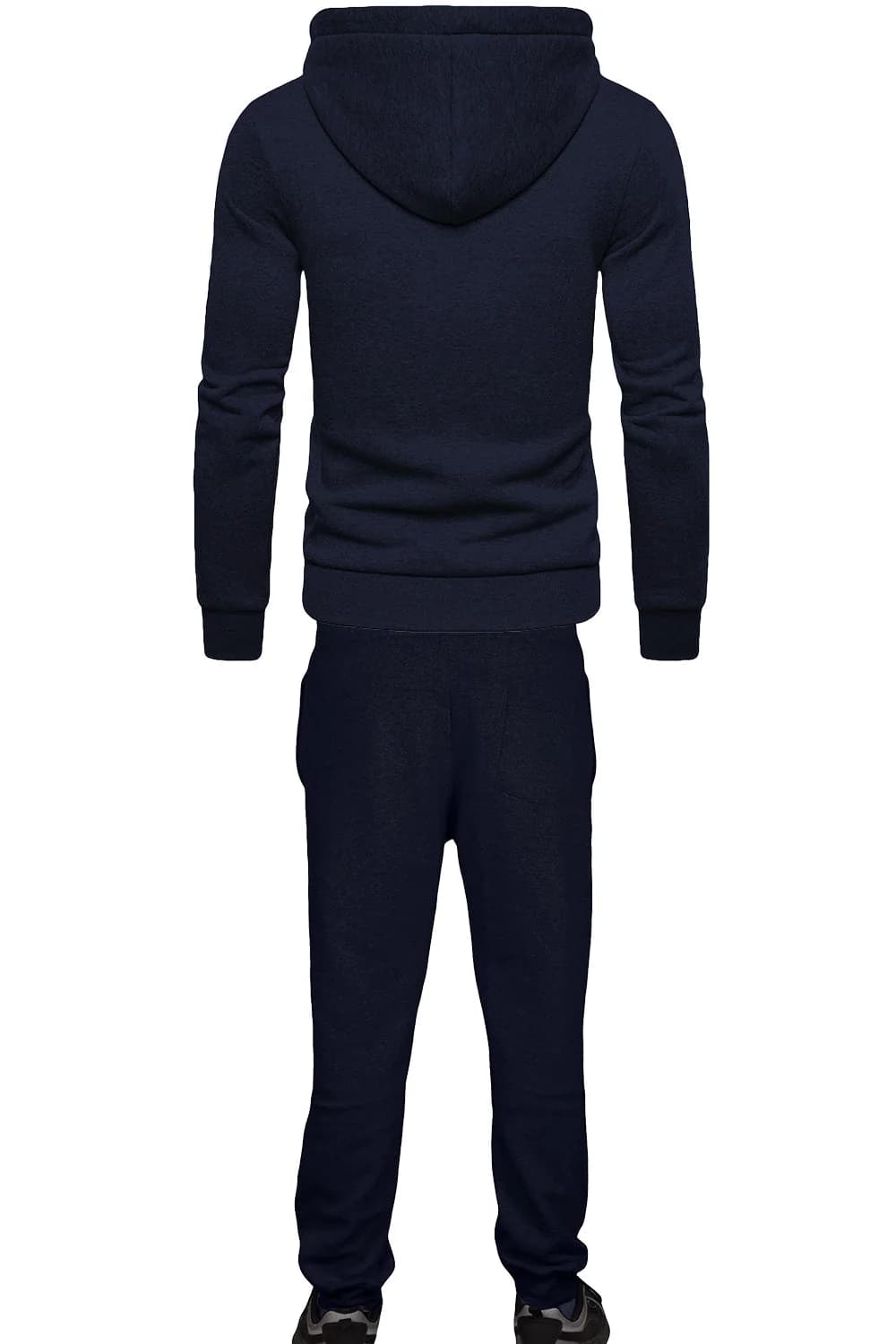
A tracksuit quotation can go wrong before anyone cuts fabric if one person counts sets and another counts individual garments. A request for 100 pieces might mean 50 complete outfits, 100 tops, or 100 top-and-bottom sets. Put the unit definition at the start of the brief.
A custom tracksuit manufacturer also needs to know how the two garments relate. The top and trousers may share material, colours and branding while requiring different fit approvals, components and size allocations. This guide focuses on organising that order, rather than repeating a general overview of tracksuit styles.
Write a set definition before the size breakdown
Name every included garment: for example, one zip jacket and one pair of trousers. Specify whether the price is requested per complete set or separately for each component. Identify optional items such as a T-shirt as additional products, not assumed inclusions.
Use a breakdown that makes the relationship visible:
| Colour | Top size | Bottom size | Complete sets |
|---|---|---|---|
| Navy | S | S | 10 |
| Navy | M | M | 20 |
| Navy | L | M | 10 |
| Navy | L | L | 10 |
This is an illustrative 50-set allocation, not an approved minimum or recommended sales mix. It contains 100 garments. Ask the manufacturer how minimums apply to each component, material and colour before treating a set total as an accepted production quantity.
Approve top and bottom fit separately
Provide a measurement chart for both garments. For the top, consider chest, body length, shoulder, sleeves and opening. For trousers, consider waist, rise, thigh, inseam, leg opening and any cuff. Record whether the intended fit is relaxed, tapered or another defined shape.
Review the two items on a wearer as a complete outfit. A jacket that fits alone may bunch at the waistband when paired with a higher-rise trouser. If customers can choose mixed sizes, decide how that selection will be identified and packed.
Match colour across materials, not just names
Body fabric, rib, zipper tape, drawcord and embroidery may all use different materials. Calling every component navy does not guarantee a coordinated appearance. Ask for the proposed components to be compared together under consistent lighting.
If tops and bottoms use different fabrics, review their appearance as a pair. A smooth woven surface can look different from a textured knit in the same nominal shade. Approve the intended relationship rather than requiring an undefined perfect match between unlike materials.
Retain a named colour reference and the approved sample revision. For reorders, discuss material availability and shade review again instead of assuming that a later batch will be indistinguishable from the first.
Fix construction details before decoration
Identify zipper type and length, pocket construction, waistband, drawcord route and cuff finish. These details affect the artwork area and how the garments are assembled. A chest logo, trouser logo and large back print are three separate placement decisions.
Mark decoration dimensions from seams or other repeatable reference points. Check both pieces at the smallest and largest intended sizes. An artwork position suitable for one top size may crowd a pocket or zipper when the pattern changes.
Pack for the way the sets will be sold
Decide whether each set arrives together in one bag or the components are packed separately. State what belongs on the outer label: style, colour, top size, bottom size and quantity. Mixed-size sets need a clear identifier so warehouse staff do not separate the wrong items.
If tops and bottoms are sold individually, record separate product identifiers and packing quantities. Read the garment packing guide before finalising the carton brief. Packaging should follow the actual selling model, not a generic tracksuit packing assumption.
Request a complete quotation and approval plan
Send the set definition, size allocation, material references, component list, artwork and delivery country together. Ask for sample costs, what revisions are included, production scope and freight assumptions. Confirm the approval dates required for the proposed schedule.
KNAPMOD reviews the quantity split and material readiness before confirming terms. Do not convert a general starting minimum into a promise for every tracksuit configuration. Shipping transit and customs arrangements also sit outside the manufacturing duration unless the written quotation explicitly states otherwise.
Key Takeaways
Count sets and garments explicitly, approve both fits, compare all visible components and pack to match the selling model. Use the tracksuit quotation form with your paired size breakdown to make the first production discussion specific.
Knowledge is the starting point.
A clear brief is the next step.