
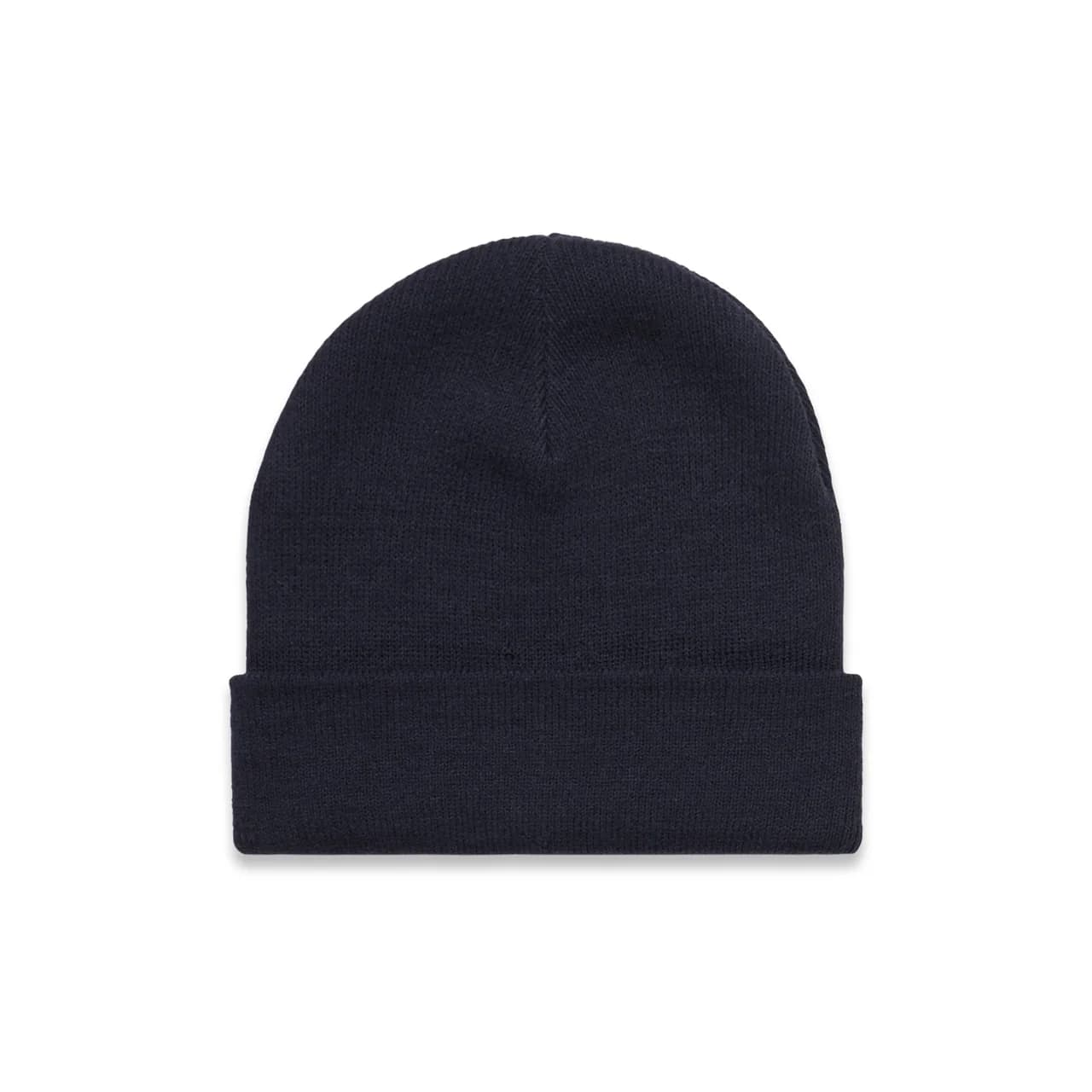
A custom beanie order starts with knitted construction, not just a logo position. Two hats described as cuffed beanies can differ in yarn, stretch, warmth, finished length and how closely they sit against the head. Those differences affect the sample you receive and the quotation you compare.
When approaching a beanie manufacturer, send a worn reference alongside flat photographs. The worn view explains the silhouette; the flat view helps identify measurements. KNAPMOD reviews knitted headwear through its custom caps and hats enquiry, with the development route and order minimum confirmed for the proposed design.
Choose the silhouette before the yarn
Specify whether the beanie should cover the ears, sit higher as a short fisherman shape, or retain extra length above the crown. Record the intended cuff depth in the worn position. A deep cuff consumes part of the overall length, so overall height alone does not describe the finished fit.
Include the intended wearer and season. Avoid writing only adult unisex or one size. Ask which head-circumference range the sample should accommodate, then assess comfort at both ends of that range. A very stretchy hat is not necessarily comfortable or stable after extended wear.
Describe yarn and knit separately
Give the requested fibre composition, surface feel and colour reference. Explain whether softness against the skin, shape retention or a particular appearance is the priority. If composition is undecided, request alternatives with the same intended fit so the comparison is useful.
Knit structure and yarn selection are separate decisions. Rib width, stitch appearance and the number of layers influence how a beanie stretches and sits. Ask for a sample or close-up that shows the inside as well as the outside. A photograph of a folded cuff can hide differences in the body construction.
Do not advertise recycled, organic or performance properties merely because a yarn option was discussed. Confirm the material actually ordered and the documentation supporting any claim before writing customer-facing labels.
Put measurements into a repeatable method
Use one drawing with measurement points rather than exchanging several annotated screenshots. State whether the hat is relaxed or stretched, the cuff is folded or unfolded, and the product has been conditioned after washing.
| Measurement | What to clarify |
|---|---|
| Relaxed opening width | Lay flat without pulling the knit |
| Overall height | State whether the cuff is unfolded |
| Worn cuff depth | Measure the agreed fold, not an arbitrary turn-up |
| Crown shape | Include a side reference and the intended excess length |
| Fit range | Assess on wearers or a suitable head reference |
Agree tolerances with the manufacturer. Copying a measurement from a rigid woven cap does not establish a suitable tolerance for a knitted beanie.
Approve the logo on the folded cuff
Embroidery, woven labels and sewn patches change the feel of a small accessory. Share artwork at its intended physical size. Fine lettering that looks readable on a large screen may not remain clear when reduced to the cuff.
Mark the centre and bottom of the logo from the finished cuff edge. For a label folded over an edge, show which side is visible when worn. Check backing, seam ends and stiffness against the forehead. Approve decoration on the actual knitted construction rather than on an unrelated flat fabric swatch.
Separate sample approval from the bulk order
Review silhouette, comfort, seam finishing, decoration and recovery after the agreed care check. Record the exact sample revision, yarn reference, cuff arrangement and artwork version accepted. Keep photographs of the approved inside finishing so it can be compared with later pieces.
KNAPMOD's general starting minimum is 50 pieces, but a knitted accessory still needs its own quantity review. Yarn colours, custom labels and the knitting route can impose different requirements. Ask for quantities by design and colour rather than assuming that several unrelated hats can be combined into one minimum.
Send a quotation-ready beanie brief
Include the following in one enquiry:
- Worn and flat reference images, with the features you want identified.
- Yarn preference, knit structure and colour references.
- Measurement drawing, cuff depth and intended fit range.
- Logo artwork, application method and placement dimensions.
- Pieces per colour, label and packing requirements.
- Delivery country and requested arrival date.
Ask the quotation to separate sample work, decoration setup, garments and delivery. Confirm what happens if the fit sample needs another revision. Use the manufacturing quote comparison guide to keep competing offers on the same scope.
Key Takeaways
A useful beanie brief connects yarn, construction, worn fit and decoration. Approve the cuff and logo together, define the measurement method, and confirm the minimum for the actual design. Send these references through the headwear manufacturing page to discuss a sample and quotation.
Knowledge is the starting point.
A clear brief is the next step.